When Can Toddlers Eat Pancakes? A Parent's Guide
Short answer: for most babies, pancakes can show up on the tray around 6 months, once they've started solids — as long as the texture is soft, the pieces are the right size, and the ingredients are baby-appropriate. The longer answer is worth a few minutes, because "pancakes" can mean anything from a soft banana-oat round to a diner short stack drowning in syrup. Those are very different foods for a 7-month-old.
We've been through the starting-solids stage three times at our house, so here's the guide we wish someone had handed us.
Pancakes by age and stage
Every kid moves at their own pace, so treat these as rough landmarks, not deadlines.
- Around 6–9 months: Once your baby is sitting up well and showing readiness for solids, soft pancakes are actually a great early food — especially if you're doing baby-led weaning. Cut them into finger-length strips (about the size of two adult fingers) so your baby can palm them and gnaw. The pancake should squish easily between your thumb and finger; if it doesn't, it's too tough for a mouth with no molars.
- 9–12 months: The pincer grasp arrives — that adorable thumb-and-finger pickup. Now you can move to small, bite-sized pieces, roughly the size of a chickpea. Strips still work too; many babies go back and forth.
- 12 months and up: Most toddlers can handle pancake pieces close to how you'd serve them, just cut smaller. By 18–24 months, plenty of kids insist on holding the whole pancake themselves. (This is a hill they will die on. Let them have it.)
Safety first: it's mostly about texture and size
Pancakes are generally considered a lower-risk food when they're soft — but a few habits make a real difference:
- Squish test every time. Dense, rubbery, or dried-out pancakes are harder to manage. Soft and moist is the goal.
- Right-size the pieces. Strips for early eaters, pea-to-chickpea pieces once the pincer grasp shows up.
- Skip sticky toppings for babies. Thick nut butter spread in a slab can be tough to move around a small mouth — spread it thin if you use it. And no honey at all before 12 months.
- Seated and supervised. Eating happens sitting down, with you nearby. Not in the car seat, not toddling around the living room.
What to look at on the ingredient list
If you're making pancakes from scratch, you control everything. If you're buying them — and honestly, some mornings you're buying them — flip the package over and check:
- Added sugar. Health organizations generally recommend avoiding added sugars for babies and toddlers under 2. Fruit-sweetened is a different story: a pancake sweetened with real banana gets its sweetness with the fiber and nutrients still attached.
- Sodium. Little kidneys don't need much salt. Compare labels — the range between brands is surprisingly wide.
- Recognizable ingredients. Oats, banana, eggs, milk — words you'd use in your own kitchen. This is exactly why we built our own Mompie Cakes around real banana and oats with no added sugar: we got tired of squinting at labels that read like chemistry homework.
A word about allergens
Standard pancakes usually contain egg, milk, and wheat — three of the most common food allergens. Current guidance has shifted toward introducing common allergens early rather than delaying them, because early exposure may help. But this is exactly the kind of decision to make with your pediatrician, especially if your baby has eczema or a family history of food allergies. Introduce one new allergen at a time, in a small amount, earlier in the day, so you can watch for a reaction.
Easy ways to serve them
- Plain strips — genuinely, most babies are thrilled with just this.
- Thin smear of yogurt or mashed fruit on top for extra flavor and moisture.
- Alongside soft fruit — banana coins, ripe pear, smashed blueberries.
- Warm, not hot. Whatever heating method you use, always check the temperature before it hits the tray. Ours go from freezer to plate in under a minute, which is about how long a hungry toddler is willing to wait.
The bottom line
You don't need to wait until some official "pancake birthday." Around 6 months, with a soft texture, sensible pieces, and no added sugar, pancakes can be one of the easiest and happiest early foods — and one of the few breakfasts that works for the baby, the preschooler, and the grown-ups at the same table. That last part, in our experience, is what actually saves the morning.
This article is for informational purposes only and isn't medical advice. Always consult your pediatrician about your child's diet.
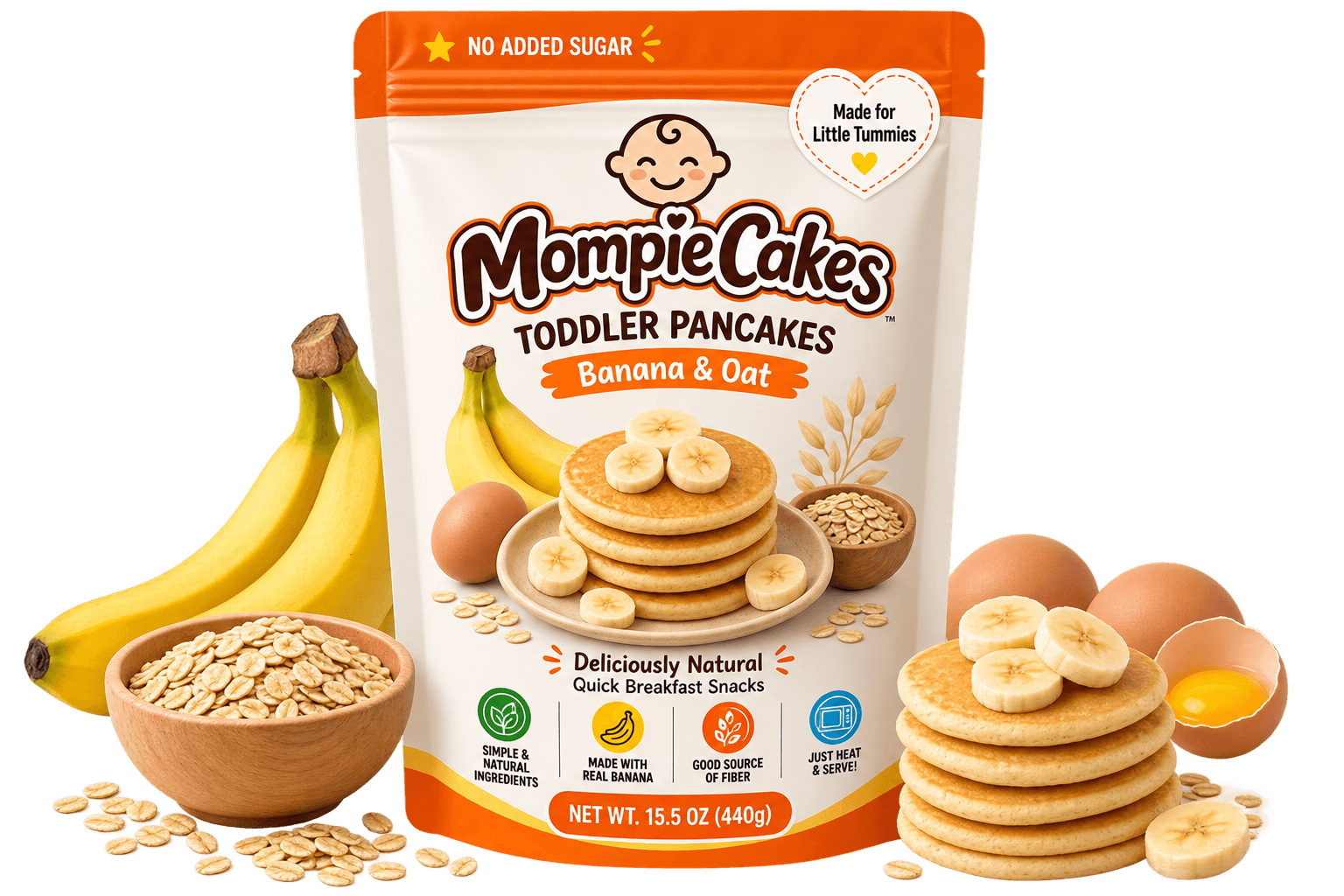
Try Mompie Cakes
Soft-baked banana & oat pancakes for ages 6 months – 3 years. No added sugar, ready in under a minute.
Shop Pancakes